Choosing between luxury vinyl tiles (LVT) and carpet tiles for office flooring requires careful consideration, as both options offer unique benefits. LVT is known for its durability, low maintenance, and extensive design choices, while carpet tiles provide comfort, acoustic advantages, and a cosy, welcoming aesthetic. Selecting the right flooring can enhance both productivity and the overall look of your workspace, making it an important decision.
Read on to find out our pros and cons for both carpet tiles and vinyl tiles.
Commercial Vinyl Tiles
Vinyl Pros
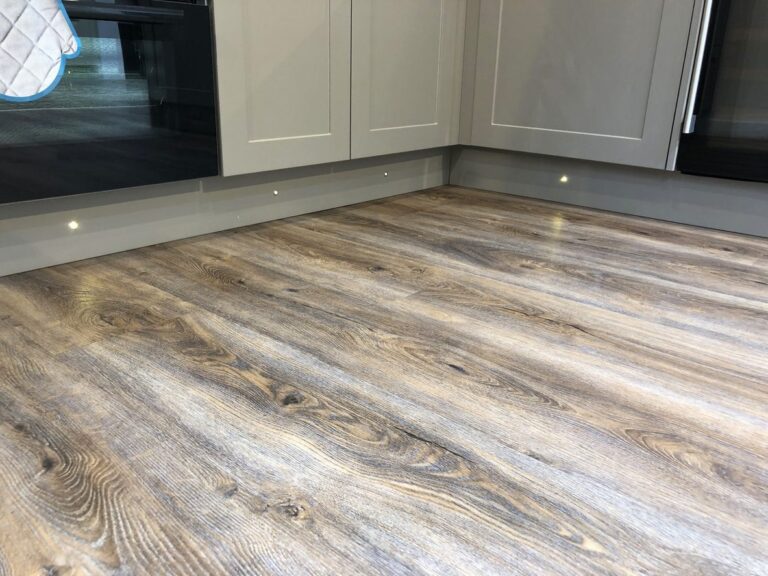
Vinyl tiles have been proven globally as a flexible and cost-effective option for many commercial settings. Used in an endless number of settings and industries. Available in both vinyl composite tiles, and natural-looking luxury vinyl tiles, vinyl can meet many budgets. Both types also offer an incredible range of colours and finishes and can be selected to match the style and feel of your company.
Easy to install and maintain, vinyl tiles are laid in strips using commercial adhesive, meaning no grouting or deep seams. Thanks to this, cleaning is kept simple whether chosen in an office, workshop or kitchen. Durability is another strong point for vinyl tiles, capable of taking years of heavy foot traffic with minimal wear and tear. Whether you are looking for the look of hardwood at a fraction of the cost or unban chin industrial aesthetic, thanks to the endless possibilities of style and finish vinyl tiles can be selected to match any business. Given the hygienic covering on many vinyl tiles keeping up with frequent sanitation couldn’t be easier. This is an even more important consideration following the global pandemic.
Vinyl Cons
Regardless of which vinyl tile you choose, one unavoidable downside is the lower thermal insulation compared to another flooring. This will mean the flooring will never feel as warm underfoot like a carpet tile. This may not be as much of an issue in fully enclosed spaces or offices, where the room temperature can help conceal this aspect of vinyl tiles.
Another common disadvantage is vinyl flooring will never match carpet for its noise absorption. Resulting in more noise passing from one office to the above office. That being said this can be addressed in a number of ways, the most common being the use of sound insulation underlay (consider specialist levelling compound). This insulating underlay can also help mitigate the lower temperature mentioned above.

Commercial Carpet Tiles
Carpet Pros
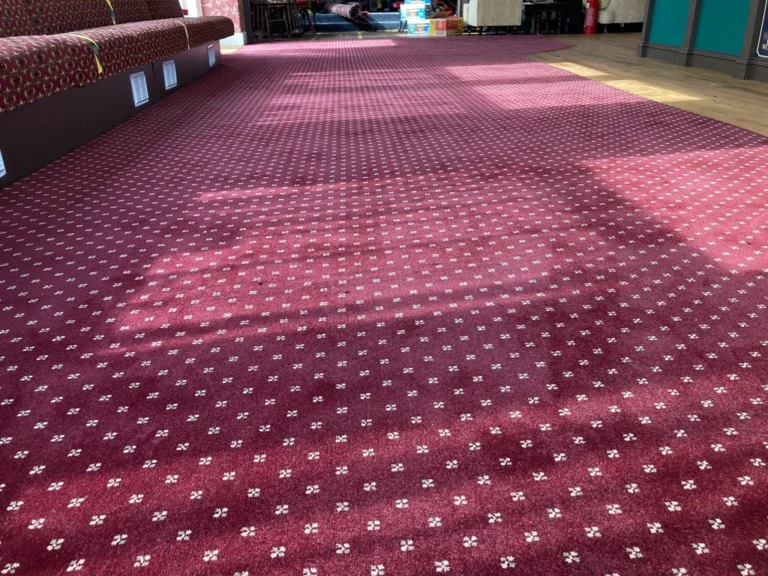
Carpets have very much passed the test of time, carpet tiles can take all the benefits and improve upon them. Continually popular in offices with the intent of making a warm and welcoming environment, modern carpet tiles can offer the look and feel of full carpet but retain the convenience and flexibility of vinyl flooring.
Perfect for modular offices, carpet tiles can be swapped, removed and replaced, allowing incredible flexibility for changes to your office or workspace. In addition, any single tile can be removed and replaced when damaged or stained. This modularity also allows different carpet tiles to be used next to each other, thus allowing high traffic paths to be laid with more durable and hardier options. Carpet tiles are also the preferred choice for any environmentally conscious company.
Commonly manufactured using recycled materials and offering significantly less waste during installation and repair than conventional carpet. In contrast to other flooring options, carpet offers unbeaten insulation since it retains warm air in the fibre of the carpet. Accordingly, carpet tiles are ideal for ground floors and entrances.
Carpet Cons
Carpet tiles are far more absorbent than vinyl, meaning that carpet will stain much easier and will require significantly more cleaning. This can be mitigated to some extent by choosing a darker colour and low profile carpets. Institutions carpet to tile although an easy process can be very easily noticed when done wrong. When laid poorly you may have a noticeable seam. It is also worth paying particular attention to the wear classification to ensure the carpet will hold up to the amount of traffic the space will have.

Is Vinyl Flooring More Affordable Than Carpet?
Both vinyl flooring and carpet are budget-friendly options compared to materials like hardwood, stone, or ceramic tiles. They offer excellent value for money and come in a wide range of price points to suit different budgets. Typically, high-pile carpets made from 100% wool tend to be more expensive per square metre than vinyl flooring. However, premium wood-effect luxury vinyl tiles can cost more than entry-level synthetic carpets.
When comparing installation, carpet fitting is generally more complex and labour-intensive than laying vinyl, resulting in higher installation costs. Vinyl flooring is often a popular choice for DIY projects due to its ease of installation, while carpet installation requires a higher level of expertise. For this reason, it’s advisable to hire a professional for carpet fitting to ensure a quality finish.
Different Flooring Needs for Different Industries
When selecting flooring, businesses must consider the unique requirements of their industry to ensure practicality, durability, and aesthetic appeal. Both carpet and vinyl have distinct advantages, making them suitable for different commercial environments.
Carpet for Comfort and Quiet:
Carpet flooring is an excellent choice for industries where comfort and noise reduction are key priorities. For example, furniture stores often use carpet to create a cosy and welcoming atmosphere, while also minimising noise from foot traffic. Carpet’s soft texture enhances the overall customer experience and complements the showroom’s aesthetic. Similarly, offices or hospitality spaces may opt for carpet to reduce echoes and create a professional, quiet environment conducive to work or relaxation.
Vinyl for Hygiene and Durability:
Vinyl flooring is ideal for industries requiring hygienic, easy-to-clean surfaces. In restaurants, kitchens, or healthcare facilities, hygiene is a top priority. Vinyl’s water-resistant and stain-resistant properties make it a practical option for areas prone to spills or high levels of foot traffic. Its seamless design also helps prevent dirt and bacteria from accumulating, meeting cleanliness standards in food and healthcare industries. Additionally, vinyl is highly durable, standing up to frequent cleaning and heavy usage without compromising on style or functionality.
By aligning flooring choices with industry-specific needs, businesses can create environments that are not only visually appealing but also tailored to their operational demands.

Contact Hendersons For More Info
We have heard many people ask the question, “Which is better: carpet tiles or vinyl tiles for commercial and office flooring?” The answer to this question depends on your needs. If you are looking for flooring that will provide comfort and warmth in an office setting, then we would recommend carpet tiles. But if you want something durable at a lower cost, then vinyl tile may be more appropriate.
For more information, give our team here at Henderson’s Carpets and Flooring a call today, we are happy to answer any questions or queries you might have. Having offered commercial flooring and office flooring across North Yorkshire and the North East for a number of years, we are sure we can help you. Give us a call today.